Embrace Experimentation And Not Fear Mistakes
- Rebecca McCarthy

- May 6
- 4 min read
Every artist knows that a sketchbook is more than just a collection of drawings. It is a personal playground where ideas take shape, evolve, and sometimes fail. When creating fashion art in a sketchbook, the key is to embrace experimentation and not fear mistakes. This approach transforms your sketchbook into a testing ground for new concepts, styles, and techniques. It encourages growth and discovery, helping you develop a unique creative voice.
In this post, you will learn how to use your sketchbook as a tool for exploration, why mistakes are valuable, and practical ways to push your fashion art beyond the expected.
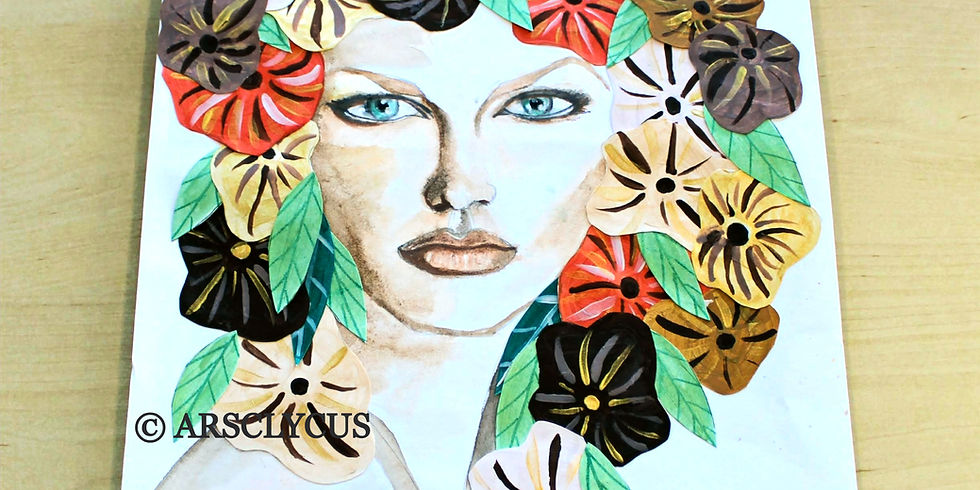
Why Your Sketchbook Should Be a Space for Experimentation
Many artists hesitate to experiment because they worry about ruining their sketchbook or producing imperfect work. This mindset limits creativity and slows progress. A sketchbook is not meant to hold only finished pieces. Instead, it is a safe space to try new ideas without pressure.
Test different styles: Try sketching in various styles, from realistic to abstract, to find what resonates with you.
Explore materials: Use pencils, markers, watercolors, or collage to see how different media affect your designs.
Play with proportions and shapes: Fashion art thrives on unique silhouettes. Sketch exaggerated or unusual shapes to discover fresh looks.
Record inspirations: Paste magazine clippings, fabric samples, or color swatches alongside your sketches to build a visual library.
By treating your sketchbook as a laboratory, you allow yourself to take risks and learn from every attempt.
How Mistakes Lead to Better Fashion Art
Mistakes are often seen as failures, but in creative work, they are stepping stones. When you experiment freely, you will create sketches that don’t work. Instead of erasing or discarding them, analyze what went wrong and why.
Identify what doesn’t fit: Maybe a color combination feels off or a silhouette looks awkward. Understanding this sharpens your design sense.
Discover unexpected outcomes: Sometimes a “mistake” leads to a new technique or style you hadn’t considered.
Build resilience: Accepting imperfection helps you stay motivated and open to new ideas.
For example, a fashion illustrator might accidentally smudge a watercolor wash. Instead of starting over, they could incorporate the smudge into a textured fabric effect, adding depth to the design.
Practical Tips to Experiment in Your Fashion Sketchbook
To make the most of your sketchbook as a creative tool, try these practical strategies:
1. Set No Rules for Your First Drafts
Start sketches loosely without worrying about details or accuracy. Use quick lines and broad strokes to capture the essence of your idea. This frees your mind from perfectionism.
2. Use Different Tools on the Same Page
Combine pencils, ink, markers, and even unconventional tools like charcoal or pastels. Mixing media can create exciting contrasts and textures.
3. Create Theme-Based Pages
Dedicate pages to specific themes such as “futuristic fashion,” “vintage styles,” or “nature-inspired textures.” This focused experimentation helps generate cohesive ideas.
4. Incorporate Collage and Fabric Samples
Cut out images from magazines or attach fabric swatches to your pages. This tactile element adds dimension and sparks new design directions.
5. Annotate Your Sketches
Write notes about what you like or dislike in each sketch. These reflections guide your future work and document your creative process.
6. Revisit and Redraw Old Sketches
Look back at previous pages and redraw or modify sketches. This practice reveals your growth and can inspire new variations.
Examples of Experimentation in Fashion Sketchbooks
Many renowned fashion designers and illustrators credit their sketchbooks for breakthroughs in their work. For instance:
Alexander McQueen used his sketchbook to combine dark romanticism with unconventional materials, often experimenting with textures and shapes.
Coco Chanel sketched simple, elegant designs but also played with bold contrasts and unexpected fabric pairings in her early notebooks.
Contemporary illustrators often layer digital and hand-drawn elements in their sketchbooks, blending traditional and modern techniques.
These examples show that experimentation is not just about wild ideas but also about refining your vision through trial and error.
Overcoming Fear of the Blank Page
One common barrier to experimentation is the fear of starting with a blank page. Here are ways to overcome it:
Start with a prompt: Use a word, color, or theme to spark ideas.
Make marks without judgment: Scribble, doodle, or paint random shapes to loosen up.
Set a timer: Give yourself 5-10 minutes to sketch without stopping.
Accept imperfection: Remind yourself that the sketchbook is for learning, not display.
By lowering expectations, you open the door to creativity.
How to Use Your Sketchbook for Fashion Design Development
Your sketchbook can also serve as a bridge from concept to final design:
Develop silhouettes: Experiment with different garment shapes and proportions.
Test color palettes: Use swatches and color studies to find harmonious combinations.
Explore details: Sketch buttons, seams, and embellishments in close-up.
Plan collections: Group related sketches to visualize a cohesive line.
This process helps you refine ideas before moving to more polished illustrations or prototypes.
Experimenting in your sketchbook is essential for growth as a fashion artist. It encourages you to take risks, learn from mistakes, and discover new creative paths. Remember, the sketchbook is your personal laboratory—a place where every mark, whether perfect or flawed, contributes to your artistic journey.

Comments